 PlantLegit
South Carolina: invasive & noxious plant laws
Free ZIP check + email reminders
In South Carolina: 103 plants are named on South Carolina's legal plant lists (noxious-weed or invasive-plant law, so restrictions apply).
Plain English: a “noxious weed” is a plant named on a state’s legal list, so selling or moving it is restricted; an “advisory” or “educational” invasive list is a warning, not a ban.
Sources (5)
- Clemson DPI — official State Plant Pest List – Clemson University Department of Plant Industry
- Clemson News — Bradford pear & Elaeagnus nursery sale ban (Oct 1, 2024) – news.clemson.edu
- S.C. Code of Regulations ch. 27, art. 10 (Reg. 27-135) — designation of plant pests (official text, SC Legislature) – South Carolina Legislature
- S.C. Code § 46-9-10 et seq. — State Crop Pest Commission (powers, quarantines, penalties) – South Carolina Legislature
- Federal Noxious Weed List, 7 CFR § 360.200 (USDA APHIS) — applies in every state – Electronic Code of Federal Regulations (eCFR)
New laws coming: several states phase in plant bans 2027–2030. See dates and sources →
State plant pest — plants (Clemson DPI official list, S.C. Code Regs. ch. 27 art. 10) (103)
| Scientific name | Common name / notes |
|---|---|
| Aeginetia spp. | in broom rape family |
| Ageratina adenophora | Sprengel Croftonweed, Croftonweek, eupatomy, sticky snake root, and throughwort |
| Agrostemma githago | Corn Cockle |
| Alectra spp. | |
| Alternanthera philoxeroides (Mart.) Griscb. | Alligatorweed, Pigweed |
| Alternanthera sessilis | Sessile joyweed |
| Asphodelus fistulosus | Onionweed, pink asphodel, hollow-stemmed asphodel |
| Avena sterilis, A. ludoviciana | Avena sterile oats, sterile oat, animated oat, wild oat, red oat, and winter wild oat |
| Azolla pinnata R. Brown | Pinnate mosquite fern, Mosquito fern, feathered mosquito fern, and water velvet |
| Calonyction muricatum | Purple Moonflower, lilacbell |
| Cardiospermum halicacabum | Balloonvine, balloon plant, and love in a puff |
| Carthamus oxyacantha | Carthamus cauox, Wild safflower, jeweled distaff thistle |
| Caulerpa taxifolia | Mediterranean clone, Green alga, and Killer alga |
| Centaurea repens | Russian Knapweed |
| Chrysopogon aciculatus | Pilipiliula, lesser speargrass, and Mackie's pest |
| Citrus reticulata var. unshu | Unshu Oranges and Satsuma orange |
| Cnicus benedictus | Blessed Thistle, St. Benedict's Thistle, holy thistle, and spotted thistle |
| Commelina benghalensis | Benghal dayflower, tropical spiderwort |
| Crupina vulgaris | Common crupina, bearded creeper, and starry scabious |
| Cuscuta spp. | Dodders, with some exceptions |
| Digitaria abyssinica | African couchgrass, Fingergrass |
| Digitaria velutina | Velvet fingergrass |
| Drymaria arenarioides H.B.K. | Alfombrilla |
| Egeria densa | Brazilian Elodea |
| Eichhornia azurea | Anchored waterhyacinth, Rooted waterhyacinth |
| Eichhornia crassipes | Water hyacinth |
| Elaeagnus angustifolia | Russian olive |
| Elaeagnus pungens | Thorny olive |
| Elaeagnus umbellata | Autumn olive |
| Emex australis | Three-cornered jack, double gee, and devils' thorn |
| Emex spinosa | Spiny emex and Devil's thorn |
| Euphorbia prunifolia | Painted euphorbia, Leafy spurge |
| Ficaria verna | Fig Buttercup, Lesser celandine and pilewort |
| Galega officinalis | Goat's rue, Galega, French lilac, and professor's weed |
| Helianthus ciliaris | Texas Blueweed, yerba parda |
| Heracleum mantegazzianum | Giant hogweed |
| Hydrilla verticillata | Hydrilla and water thyme |
| Hygrophila polysperma | Indian hygrophila, Miramar weed, and dwarf hygro |
| Imperata brasiliensis Trin. | Brazilian satintail |
| Imperata cylindrica | Cogongrass and Kunai grass |
| Indula brittanica | British yellowhead and meadow fleabane |
| Ipomoea aquatica | Water spinach, Swamp morning glory, and river spinach |
| Ipomoea triloba | Threelobe morning glory, Little bell, and Aiea morningglory |
| Ischaemum rugosum | Soramollagrass |
| Lagarosiphon major | Oxygen weed, African elodea and curly waterweed |
| Leptochloa chinensis | Chinese sprangletop and red sprankle top |
| Limnophila sessiliflora | Limnophila, Ambulia, and Asian marshweed |
| Lolium temulentum | Darnel and cockle |
| Ludwigia hexapetala | Water primrose |
| Ludwigia uruguayensis | Uraguay Primrose |
| Lycium ferocissimum | African boxthorn |
| Lythrum salicaria | Purple loosestrife |
| Melaleuca quinquenervia | Paperbark tree and punk tree |
| Melastoma malabathricum | Banks melastoma, Melastoma, and Indian rhododendron |
| Mikania cordata | African mile-a-minute |
| Mikania micrantha | Mile-a-minute |
| Mimosa invisa | Giant sensitiveplant |
| Mimosa pigra | Catclaw mimosa and giant sensitve tree |
| Monochoria hastata | Arrowleaved Monochoria and hastate-leaved pondweed |
| Monochoria vaginalis | Pickerel Weed and heartshaped false pickerel weed |
| Myriophyllum spicatum | Eurasian watermilfoil and spiked watermilfoil |
| Najas minor | Brittleleaf naid and brittle water nymph |
| Nassella trichotoma | Serrated tussock |
| Nymphoides cristata | Crested Floating Heart and floating snowflake |
| Nymphoides peltata | Yellow Floating heart and water-fringe |
| Opuntia aurantiaca | Jointed prickly pear, tiger-pear, and jointed cactus |
| Orobanche spp. Except the following broomrape species: O. bulbosa, O. californica, O. cooperi, O. corymbosa, O. dugesii, O. fasciculate, O. ludoviciana, O. multicaulis, O. parishii, O. pinorum, O. uniflorum, O. valida, O. vallicola | |
| Oryza longistaminata | Wild red rice and longstamen rice |
| Oryza punctata | Wild red rice |
| Oryza rufipogon | Brownbeard rice and red rice |
| Oryza sativa | Red Rice and Asian rice |
| Ottelia alismoides | Duck-lettuce |
| Paspalum scrobiculatum | Koda millet |
| Pennisetum clandestinum | Kikuyugrass |
| Pennisetum macrourum | African feathergrass |
| Pennisetum pedicellatum | Kyasumagrass and desho grass |
| Pennisetum polystachion | Missiongrass, Thinnapiergrass |
| Phragmites australis | Common Reed |
| Pistia stratiotes | Water lettuce, water cabbage, Nile cabbage, and shell flower |
| Polygonum perfoliatum | Mile-a-minute weed, devil's tail, Asiatic tearthrumb, and giant climbing tearthumb |
| Prosopis alpataco | Alpataco |
| Prosopis argentina | Algarobilla, algarrobo blanco, and white carob |
| Pyrus calleryana | Bradford Pear, Callery Pear |
| Rottboellia cochinchinensis | itchgrass, Raoulgrass, corngrass, Kokoma grass, Gruiena-fowl grass, jointed grass, Shamwa grass, and kelly grass |
| Rubus fruticosus | Wild blackberry and shrubby blackberry |
| Rubus moluccanus | Molucca raspberry, Molucca bramble, and broad-leafed bramble |
| Saccharum spontaneum | Wild sugarcane and Kans grass |
| Sagittaria sagittifolia | Arrowhead |
| Salsola vermiculata | Wormleaf salsola, Mediterranean saltwort |
| Salvinia auriculata | Giant salvinia, eared watermoss, African payal, and butterfly fern |
| Salvinia biloba | Giant salvinia |
| Salvinia herzogii | Giant salvinia and Herzog salvinia |
| Salvinia molesta | Floating Fern |
| Setaria pallide-fusca | Cattail grass and yellow foxtail |
| Solanum tampicense | Wetland nightshade, wetland nightshade, scrambling nightshade, and aquatic soda apple |
| Solanum torvum | Turkeyberry, devil's fig, pea eggplant, palate brush, and susumber |
| Solanum viarum | Tropical Soda Apple |
| Sparganium erectum | Branched burreed |
| Spermacoce alata | winged false buttonweed |
| Striga spp. | Witchweed |
| Trapa natans | Water Chestnut, Waternut |
| Tridax procumbens | Coat buttons, Tridax daisy |
| Urochloa panicoides | Liverseed grass |
Check plants against South Carolina law →
Informational only, not legal advice. Lists change; always check the official source linked above before you buy, sell, plant or move a plant. Lists checked 2026-10-14.
Is it illegal in South Carolina? Quick answers
Is Autumn olive illegal?Is Bradford (Callery) pear illegal?Is Purple loosestrife illegal?
Top 10 plants to remove in South Carolina (with photos)
These are common yard plants on South Carolina's official or state-agency lists. Legally regulated plants come first, then plants covered only by a store-sign law, then plants listed as invasive for education only, which are not banned. Legal status is not the same as having to remove a plant you already own, so check the category under each photo. Swap them for natives: native alternatives →
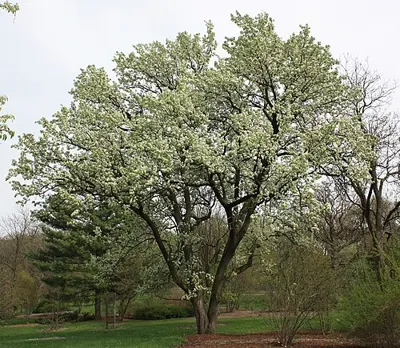
Legally regulated
State plant pest — no sale or distribution (Clemson DPI State Plant Pest List, S.C. Code Regs. ch. 27 art. 10; sale ban in effect Oct 1, 2024) · detailsPhoto: Bruce Marlin, CC BY 3.0, Wikimedia Commons

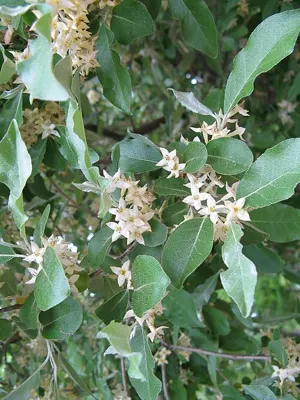
Legally regulated
State plant pest — no sale or distribution (Clemson DPI State Plant Pest List, S.C. Code Regs. ch. 27 art. 10; sale ban in effect Oct 1, 2024) · detailsPhoto: KENPEI, CC BY-SA 3.0, Wikimedia Commons

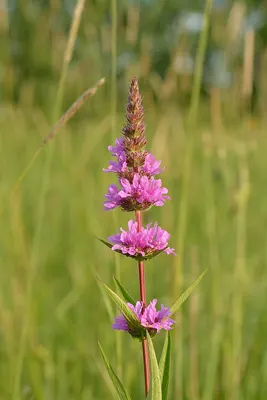
Legally regulated
State plant pest — plants (Clemson DPI official list, S.C. Code Regs. ch. 27 art. 10) · detailsPhoto: Ivar Leidus, CC BY-SA 3.0, Wikimedia Commons

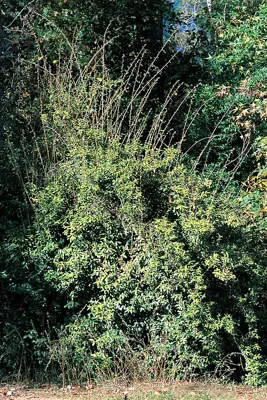
Legally regulated
State plant pest — no sale or distribution (Clemson DPI State Plant Pest List, S.C. Code Regs. ch. 27 art. 10; sale ban in effect Oct 1, 2024)Photo: James H. Miller, USDA Forest Service, Bugwood.org, CC BY 3.0 US, Wikimedia Commons

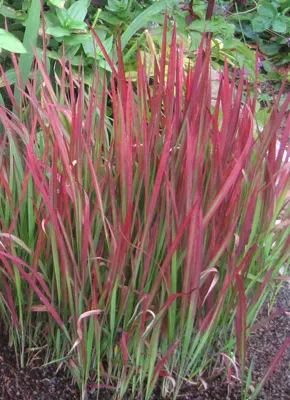
Legally regulated
State plant pest — plants (Clemson DPI official list, S.C. Code Regs. ch. 27 art. 10)Photo: GearedBull at English Wikipedia, CC BY 3.0, Wikimedia Commons

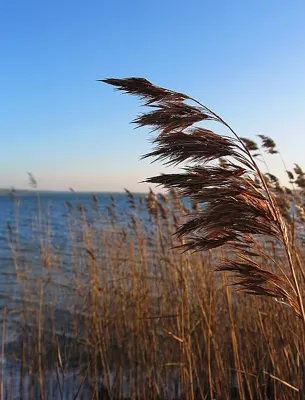
Legally regulated
State plant pest — plants (Clemson DPI official list, S.C. Code Regs. ch. 27 art. 10)Photo: Darkone (talk · contribs), CC BY-SA 2.0, Wikimedia Commons

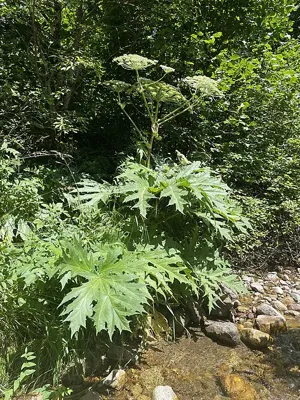
Legally regulated
State plant pest — plants (Clemson DPI official list, S.C. Code Regs. ch. 27 art. 10)Photo: anastasiiamerkulova, CC BY 4.0, Wikimedia Commons

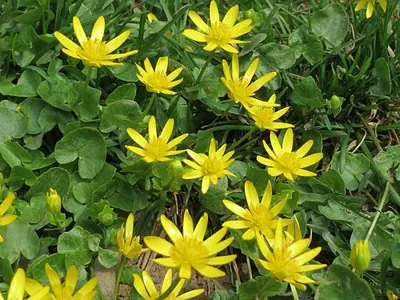
Legally regulated
State plant pest — plants (Clemson DPI official list, S.C. Code Regs. ch. 27 art. 10)Photo: AnRo0002, CC0, Wikimedia Commons

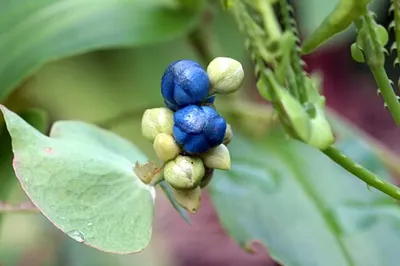
Legally regulated
State plant pest — plants (Clemson DPI official list, S.C. Code Regs. ch. 27 art. 10)Photo: Dalgial, CC BY 3.0, Wikimedia Commons

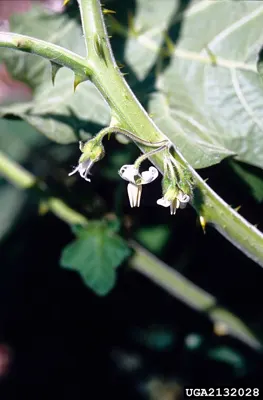
Legally regulated
State plant pest — plants (Clemson DPI official list, S.C. Code Regs. ch. 27 art. 10)Photo: James H. Miller, USDA Forest Service, Bugwood.org, CC BY 3.0 US, Wikimedia Commons

Additional official listings (checked 2026-10-15)
Additional official listings (checked 2026-10-15)
From the sources added to this page's source list: Clemson News — Bradford pear & Elaeagnus nursery sale ban (Oct 1, 2024), S.C. Code of Regulations ch. 27, art. 10 (Reg. 27-135) — designation of plant pests (official text, SC Legislature), S.C. Code § 46-9-10 et seq. — State Crop Pest Commission (powers, quarantines, penalties).
| Plant | Category | Note / date |
|---|---|---|
| Autumn olive (Elaeagnus umbellata) | State plant pest — no sale or distribution (Clemson DPI State Plant Pest List, S.C. Code Regs. ch. 27 art. 10; sale ban in effect Oct 1, 2024) | Autumn olive — nursery sale and trade banned (took effect Oct 1, 2024) |
| Callery pear (Pyrus calleryana) | State plant pest — no sale or distribution (Clemson DPI State Plant Pest List, S.C. Code Regs. ch. 27 art. 10; sale ban in effect Oct 1, 2024) | Bradford Pear, Callery Pear — nursery sale and trade banned (took effect Oct 1, 2024) |
| Thorny olive (Elaeagnus pungens) | State plant pest — no sale or distribution (Clemson DPI State Plant Pest List, S.C. Code Regs. ch. 27 art. 10; sale ban in effect Oct 1, 2024) | Thorny olive — nursery sale and trade banned (took effect Oct 1, 2024) |
Native swaps for South Carolina
Instead of Autumn oliveInstead of Bradford (Callery) pearInstead of Purple loosestrife
How the law works in South Carolina
Under S.C. Code of Regulations ch. 27, article 10 (Reg. 27-135 and following), Clemson University's Department of Plant Industry maintains the official list of plant pests for South Carolina, reviewed at least annually by an advisory committee. Reg. 27-135 gives the Director authority to eradicate, control or slow the spread of plant pests, and when the State Crop Pest Commission finds a plant pest on premises or in transit it may, after notice to the owner, seize, quarantine, treat or dispose of it, or order the owner to treat or dispose of it (S.C. Code § 46-9-60(A)). Clemson says a species added to the list typically becomes illegal to move or sell the same day; for Callery pear and three Elaeagnus species the nursery sale ban began October 1, 2024 (Clemson News, July 14, 2021). This page transcribes the 'Plants' section of the official list. The official list names Russian olive (Elaeagnus angustifolia) as well; Clemson News lists it with Callery pear, autumn olive and thorny olive as the species whose nursery sale ban began October 1, 2024. Penalties under the State Crop Pest Act: a misdemeanor with a fine of $50 to $500 or 10 to 30 days in jail for a first offense, and civil penalties of up to $1,000 per violation, each day a separate violation (S.C. Code § 46-9-90).