 PlantLegit
Rain garden plants for Virginia’s Coastal Plain (and a simple rain garden planting plan)
Sources (7)
- Native Plants for Southeast Virginia, including Hampton Roads (Virginia Coastal Zone Management Program / Plant Virginia Natives, 2nd ed. 2025)
- Virginia Cooperative Extension 426-043: Rain Garden Plants (Andruczyk & Fox; reviewed Jan 2024)
- Virginia Cooperative Extension SPES-13P: Stormwater Management for Homeowners, Fact Sheet 5: Rain Gardens
- Virginia Association of Soil & Water Conservation Districts: VCAP Rain Garden
- Virginia DCR Natural Heritage: Virginia Invasive Plant Species List
- University of Maryland Extension: Soil Health, Drainage, and Improving Soil
- Virginia 811: Homeowners
By Jacob Knapp, Virginia-licensed home inspector, Virginia Beach. Sources checked November 11, 2026. General guidance, not engineering or legal advice.
A rain garden is a shallow, planted dip that catches roof or driveway water and lets it soak in. The Southeast Virginia guide calls it "a puddle with plants." It's only 6–8 inches deep and holds water for less than 4 days, so it doesn't breed mosquitoes (SEVA guide).
I'm a home inspector, so I'll say the unpopular part first: a rain garden is not a fix for every wet yard. If your yard holds water for days, read standing water in your yard: a home inspector's fix order before you dig.
Before you plant: is your spot right?
Virginia Cooperative Extension's rain garden fact sheet says to put it (VCE SPES-13P):
- At least 10 feet from building foundations
- Not on steep slopes, and not over underground utilities or a septic field
- Not where the soil's clay content is high or the water table is high. The bottom should be at least 2 feet above the seasonal high water table.
Run a drainage test first. University of Maryland Extension's version: a 12-inch-deep, 12-inch-wide hole, filled, refilled the next day, should drain within eight hours (UMD Extension). Call Virginia 811 at least 3 working days before you dig (Virginia 811).
How big? The divide-by-20 rule
Measure the roof and paved area that drains to the garden, add them up, and divide by 20. That's the minimum size in square feet (VCE SPES-13P).
| Virginia Extension's example | Square feet |
|---|---|
| Quarter of a 60 × 80 ft roof drains to the garden | 1,200 |
| Plus a 15 × 45 ft driveway | 675 |
| Total area draining in | 1,875 |
| Rain garden size (1,875 ÷ 20) | about 94 |
Dig so the finished surface is 6 to 8 inches below the surrounding soil, or about 12 inches if you're adding compost or planting big root balls (VCE SPES-13P). Plan where overflow goes in a heavy storm.
Rain garden plants by zone
The SEVA guide splits a rain garden into three planting zones: low (wettest), middle, and high (the driest upper edge). Pick by zone and by the size of the garden (SEVA guide). Every plant below is on the guide's rain garden list or its wet-site lists, and the wording in quotes is the guide's. Which zone each one goes in is my call, based on that soil wording.
Low zone (center, wettest)
| Plant | Size | Soil (guide wording) |
|---|---|---|
| Buttonbush Cephalanthus occidentalis (shrub) | 5–12 ft | “Prefers wet soil, including flooding and standing fresh water” |
| Virginia blue flag Iris virginica | 2–4 ft | “Moist to wet, rich acid soils”; the guide calls it “ideal” for rain gardens |
| Swamp rose mallow Hibiscus moscheutos | 3–8 ft | “Wet or moist soils” |
| White turtlehead Chelone glabra | 3–4 ft | “Rich, wet to moist soils” |
| Soft rush Juncus effusus | 1–4 ft | “Wet or moist, clay, sandy or loam soils”; “strictly a wet soil plant” |
| Cardinal flower Lobelia cardinalis | 1–4 ft | “Consistently moist to wet, humus-rich, sandy & clay soils” |
| Swamp milkweed Asclepias incarnata | 2–5 ft | “Moist/wet, rich soils, tolerates clay”; Monarch host |
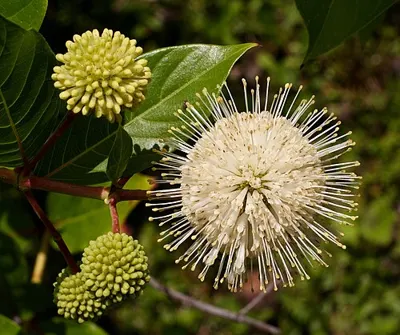
Photo: Rufino Osorio (also known as Desmodium), CC BY-SA 2.5, source

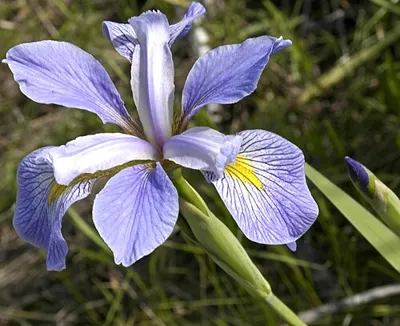
Photo: Frank Mayfield, CC BY-SA 2.0, source

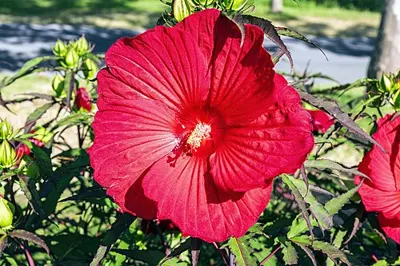
Photo: Didier Descouens, CC BY-SA 4.0, source

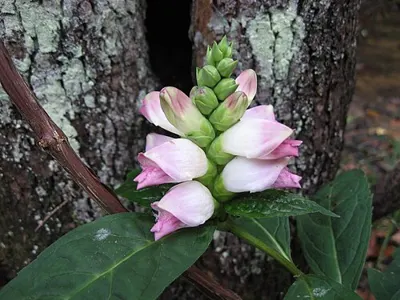
Photo: Mason Brock (Masebrock), Public domain, source

Middle zone (slopes)
| Plant | Size | Soil (guide wording) |
|---|---|---|
| Inkberry Ilex glabra (evergreen shrub) | 4–6 ft | “Wet to moist, sandy, acid soils; flood tolerant” |
| Virginia sweetspire Itea virginica | 3–4 ft | “Average, medium to wet, soils” |
| Sweet pepperbush Clethra alnifolia | 3–6 ft | “Average, medium to wet soils; tolerates clay” |
| Winterberry Ilex verticillata | 3–12 ft | “Average, acidic, dry, medium to wet soils; tolerates clay”; needs a male and a female plant for berries |
| Switchgrass Panicum virgatum | 3–6 ft | “Dry to moist, sandy, clay or loam soils; poor drainage is OK” |
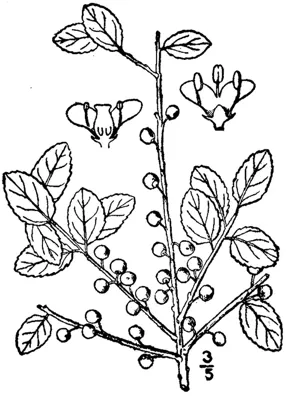
Photo: USDA-NRCS PLANTS Database / Britton, N.L., and A. Brown. 1913. An illustrated flora of the northern United States, Canada and the British Possessions. Vol. 2: 487., Public domain, source

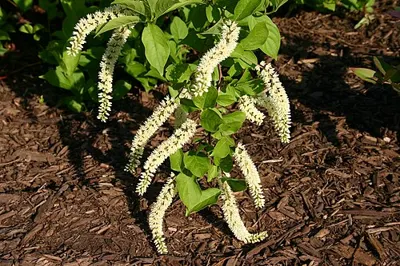
Photo: User:SB_Johnny, CC BY-SA 3.0, source

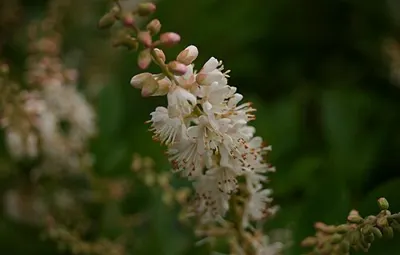
Photo: Sten Porse, CC BY-SA 3.0, source


Photo: Photo (c)2007 Derek Ramsey (Ram-Man), CC BY-SA 2.5, source

High zone (upper edge, driest)
| Plant | Size | Soil (guide wording) |
|---|---|---|
| Butterfly weed Asclepias tuberosa | 1–3 ft | “Moist or dry, well-drained sandy soils”; drought tolerant |
| Black-eyed Susan Rudbeckia hirta | 1–3.5 ft | “Moist to dry, well-drained acidic soils; drought tolerant” |
| Little bluestem Schizachyrium scoparium | 1–4 ft | “Adaptable, well drained, poor, moderate acid soil” |
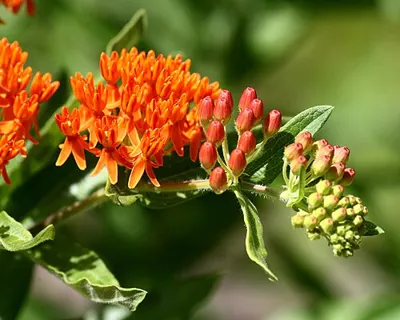
Photo: Ragesoss, CC BY-SA 3.0, source

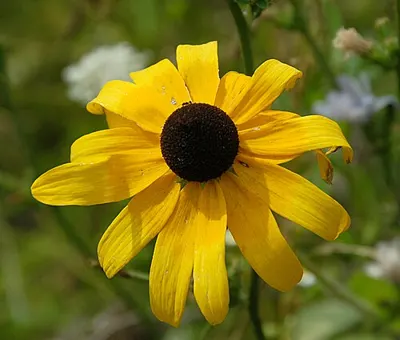
Photo: G. Edward Johnson, CC BY-SA 3.0, source

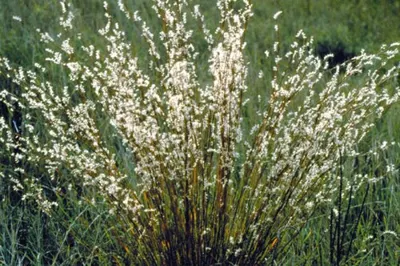
Photo: Unknown author, Public domain, source

Room for a tree? The guide's rain garden list includes sweetbay magnolia, river birch, American hornbeam, redbud and fringetree. Extension says small trees (10–25 ft) need at least 50–400 square feet of planting area, so most backyard rain gardens are shrub-and-perennial size (VCE 426-043).
A simple rain garden planting plan
Here's how I'd plant a rain garden of about 100 square feet, using Virginia Extension's rules (VCE 426-043, SPES-13P):
- Pick 5 to 10 species. Extension's rule of thumb is one species per 10 to 20 square feet, so a 100 sq ft garden gets 5 to 10.
- Center (low zone): one buttonbush or a group of blue flag iris, plus swamp milkweed or turtlehead.
- Slopes (middle zone): two or three inkberry or sweetspire for winter structure, plus a clump of switchgrass.
- Edge (high zone): butterfly weed and black-eyed Susan along the front where you'll see them.
- Group and layer. Plant shrubs and perennials in groups of three to five of the same kind. Tall plants go in the center or back, short ones on the edges.
- Space by mature width. Shrubs should touch at maturity but not crowd. Extension's example: inkberry that grows 4 feet wide goes 4 feet apart. Space perennials so they grow together and cover the ground.
- Mulch once. Spread 2–3 inches of organic mulch at planting. After that, don't re-mulch every year like a normal bed, or the garden fills in and stops holding water. Mulch may float when water comes in.
- Water the first season. About 1 inch a week for the first six months unless it rains. Then check after storms that water isn't standing more than four days.
Extension's 426-043 list mixes natives and non-natives (crape myrtle, hosta, canna and others). This page sticks to Southeast Virginia natives. If you're adding something else, check it against Virginia's lists first. The DCR Virginia Invasive Plant Species List is advisory, and some plants on older wet-site lists are on it.
What it costs, and who pays you back
Virginia Cooperative Extension says rain gardens run from as low as $5 to more than $20 per square foot, and doing it yourself cuts the cost a lot (VCE SPES-13P).
The Virginia Conservation Assistance Program reimburses rain gardens at 80% of total cost, up to $7,000 (VASWCD). It runs through local soil and water conservation districts, so ask yours. In Hampton Roads, also see VCAP and Virginia Dare SWCD, Lynnhaven River NOW Pearl Yards and the Elizabeth River Project. Programs set their own rules, so read them before you build.
Want it sized and drawn for your yard?
The Rain Garden + Yard Drainage Pack ($49) sizes a rain garden from your roof (with the math shown), draws a to-scale layout with a plant list checked for your ZIP, and gives 7 numbered build steps, downspout fixes and a shopping list. It includes your $11.99 My Yard Plan.
See if it covers my ZIP Pack details →
Just want the plant list? Check your ZIP free, or get the $11.99 My Yard Plan (sample).
Common questions
What plants are good for a rain garden in Virginia?
For the Coastal Plain, the Native Plants for Southeast Virginia guide lists rain garden natives such as swamp milkweed, Virginia blue flag, swamp rose mallow, white turtlehead, buttonbush, inkberry, Virginia sweetspire, winterberry, soft rush and switchgrass. Put the wettest-tolerant plants in the low center and drought-tolerant ones on the upper edge.
How big should a rain garden be?
Virginia Cooperative Extension: add up the roof and paved area that drains to it, then divide by 20. That is the minimum size in square feet. Their example: 1,875 square feet of roof and driveway needs a rain garden of about 94 square feet.
How deep is a rain garden?
Virginia Cooperative Extension says the finished depth should be 6 to 8 inches below the surrounding soil, and you may need to dig 12 inches if you are adding compost or planting large root balls.
Will a rain garden breed mosquitoes?
It should not if it drains. Virginia Cooperative Extension says water should be held only two to four days and to check that it is not standing more than four days, because mosquitoes breed in seven.
Related: native plants for Southeast Virginia & Hampton Roads · wet clay plants · wet-spot plants by zone · yard rebates